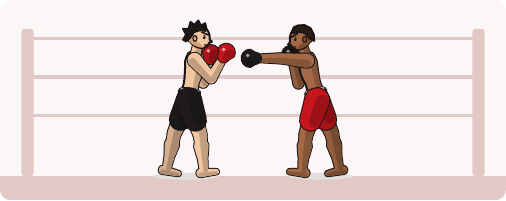
Boxing
Boxing uses punches only, but it builds footwork, head movement, timing and fitness to a level few sports can match. It has a long British tradition, from bare-knuckle prize fights to today's Olympic and professional rings.
Who it suits. Anyone who wants serious fitness and a simple, practical skill set. Boxing is excellent for confidence and stress relief.
Beginner's-eye tip. Keep your chin down and your hands up when you are tired, especially when you are tired. Good habits are built in the last round, not the first.
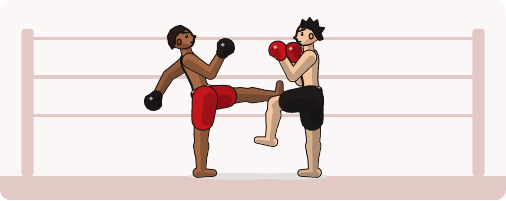
Thai Boxing (Muay Thai)
The national sport of Thailand, known as "the art of eight limbs" because it uses the fists, elbows, knees and shins. It is also famous for the clinch, where fighters control each other at close range, and for traditions such as the wai kru ram muay, a ritual dance performed before a fight.
Who it suits. People who want tough conditioning and a complete striking art. Your shins toughen up gradually; nobody expects you to kick hard on day one.
Beginner's-eye tip. Relax your shoulders. Good Thai boxers look calm because they are calm, and tension burns energy faster than anything else.
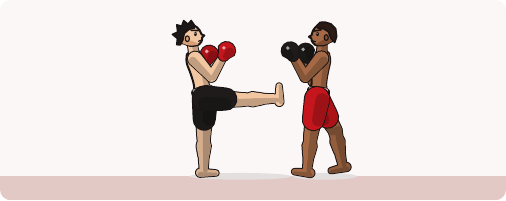
Kickboxing
Punches and kicks combined, with roots in karate, boxing and Muay Thai. Rules vary between organisations: some allow kicks above the waist only, while others, such as K-1 rules, allow leg kicks and knees.
Who it suits. Beginners who want a fun, high-energy workout and a good all-round striking base.
Beginner's-eye tip. Bring your kicking leg back the way it went out. A kick left hanging in the air is an invitation to be swept.
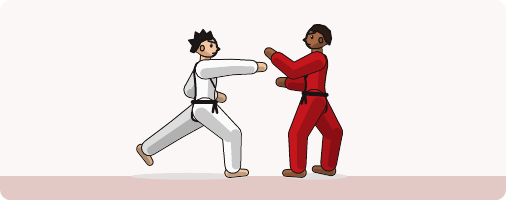
Karate
Karate developed in Okinawa and spread through mainland Japan in the early twentieth century. Popular styles include Shotokan, Wado-ryu, Goju-ryu and Shito-ryu. Training covers kihon (basics), kata (forms) and kumite (sparring). Karate made its Olympic debut at the Tokyo 2020 Games.
Who it suits. All ages. Karate is great for discipline, coordination and focus, and for families who want to train together.
Beginner's-eye tip. Don't worry about the Japanese words. Watch the student in front of you, copy them, and the counting will come.
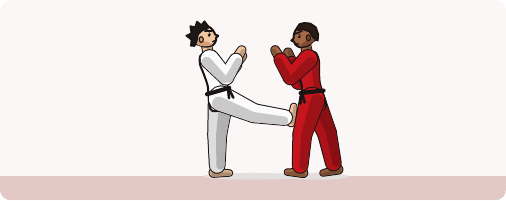
Kyokushinkai
A full-contact style of karate founded by Masutatsu "Mas" Oyama in Japan in 1964. In knockdown fighting, competitors punch to the body and kick to the body, legs and head with no pads; punches to the head are not allowed. It is known as one of the toughest karate styles in the world.
Who it suits. People who want to test themselves physically and mentally, and who enjoy hard work.
Beginner's-eye tip. Kyokushinkai teaches you to keep going when your body wants to stop. Learn the difference between tired and injured, and always tell your sensei about pain.
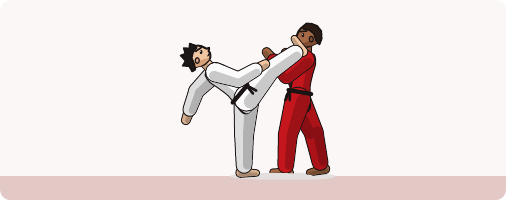
Taekwondo
A Korean art famous for fast, high and spinning kicks. There are two main branches: World Taekwondo, the Olympic version, which has been a full Olympic sport since 2000, and the ITF, founded by General Choi Hong-hi, which has its own patterns and sparring rules.
Who it suits. Children, families, and anyone who enjoys speed, flexibility and athletic movement.
Beginner's-eye tip. Flexibility comes slowly. Warm up fully before you kick high, and never bounce into a stretch.
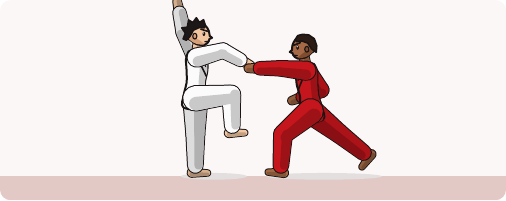
Kung Fu
A name for hundreds of Chinese martial arts, from the long, flowing northern styles to powerful southern styles such as Hung Gar and Choy Li Fut, and animal-inspired styles such as Praying Mantis. Many trace their stories back to the Shaolin Temple. Modern sport wushu grew from the same roots.
Who it suits. People who love tradition, forms, and the history and philosophy behind the arts.
Beginner's-eye tip. Your horse stance will burn. Everyone's does. Hold it a few seconds longer each week and you will be amazed how strong your legs become.
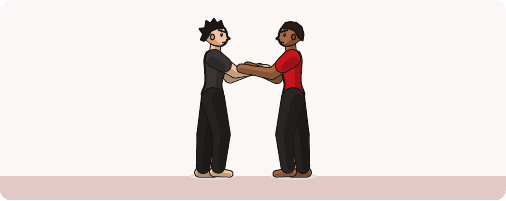
Wing Chun
A southern Chinese style built for close range. It protects your centreline, uses short, fast strikes and trains sensitivity through chi sau, or "sticking hands". Its most famous teacher was Ip Man, who taught a young Bruce Lee in Hong Kong.
Who it suits. People who want an efficient, compact art that does not depend on size, strength or high kicks.
Beginner's-eye tip. Chi sau is about feeling, not forcing. If your shoulders are tense, you cannot feel anything your partner is doing.
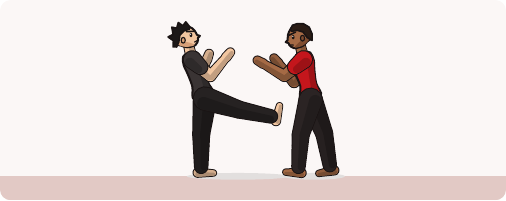
Jeet Kune Do
Developed by Bruce Lee in the late 1960s, its name means "the way of the intercepting fist". Rather than a fixed style, it is a philosophy: absorb what is useful, discard what is not, and intercept the attack. Classes often blend boxing, Wing Chun-style trapping, kicking and grappling, and many also teach Filipino martial arts.
Who it suits. Open-minded people who like to understand why a technique works, and who enjoy variety.
Beginner's-eye tip. Jeet Kune Do is about using what works. Keep a notebook of what works for your body, and be honest about what doesn't.
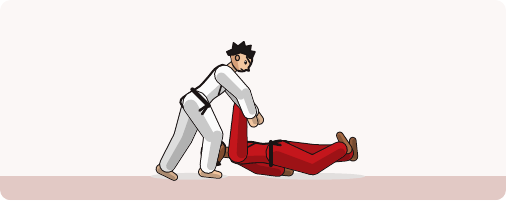
Judo
Founded by Jigoro Kano in Japan in 1882, judo means "the gentle way". It uses throws, pins, strangles and armlocks, practised against a resisting partner in randori. Judo has been an Olympic sport since 1964.
Who it suits. Children and adults alike. Judo is superb for balance, strength and confidence, and learning to fall safely is a skill for life.
Beginner's-eye tip. Love your breakfalls. Judo taught me that falling well takes the fear out of everything that comes after.
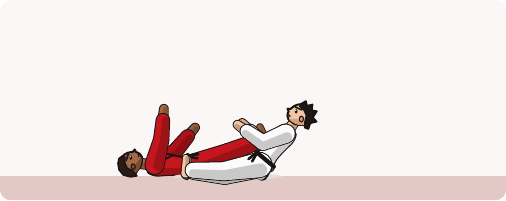
Sambo
Developed in the Soviet Union in the 1920s and 1930s, its name is short for "self-defence without weapons" in Russian. Sambo blends judo-style throws with wrestling and fast leg locks. Sport sambo allows throws, pins and arm and leg locks but not chokes; combat sambo adds strikes.
Who it suits. Grapplers who like a fast, dynamic style. Judo and wrestling skills carry over well.
Beginner's-eye tip. Leg locks come on fast. Tap early, and let go the moment your partner taps.
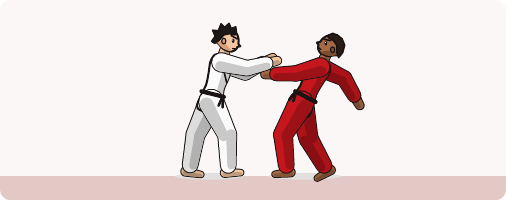
Jiu-Jitsu
Traditional Japanese jiu-jitsu, also spelt ju-jitsu, descends from the unarmed fighting methods of the samurai. Modern schools teach throws, joint locks, strikes, escapes and self-defence against grabs and attacks, and some have competition formats too.
Who it suits. People who want a well-rounded self-defence art with standing locks and throws.
Beginner's-eye tip. Joint locks look easy because the instructor's partner is cooperating. Go slowly, apply gently and let your partner tap.
Brazilian Jiu-Jitsu
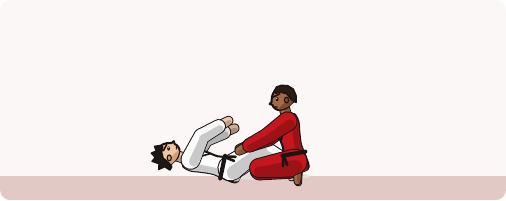
Developed in Brazil in the early twentieth century by the Gracie family and others, from the judo and jiu-jitsu taught by Mitsuyo Maeda. BJJ focuses on ground positions, sweeps and submissions, so that a smaller person can control a larger one. Belts run white, blue, purple, brown and black, and it is trained both in the gi and without it (no-gi).
Who it suits. Problem solvers who want to train at near full effort without being hit.
Beginner's-eye tip. Be patient. You will spend months on the bottom, and that is exactly where the learning happens.
Wrestling
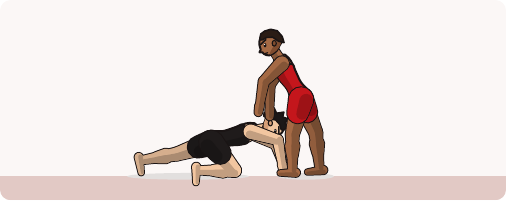
One of the oldest sports in the world. The Olympic styles are freestyle, where you can attack the legs, and Greco-Roman, where holds below the waist are not allowed. Britain also has traditional folk styles, such as Cumberland and Westmorland wrestling.
Who it suits. People who want outstanding strength, conditioning and balance. Wrestling is widely seen as one of the best bases for MMA.
Beginner's-eye tip. Keep your head up and your hips under you. In wrestling, good posture is your first line of defence.
Catch Wrestling
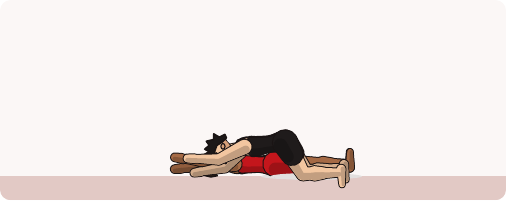
"Catch as catch can" wrestling grew up in Lancashire in the nineteenth century and travelled the world with fairground and carnival shows. As well as pins, it allows painful submission holds, known as "hooks". Wigan is famous for Billy Riley's gym, nicknamed the Snake Pit. Catch wrestling went on to shape professional wrestling, shoot wrestling and MMA.
Who it suits. Grapplers who value tough, no-frills technique and a rich history.
Beginner's-eye tip. Catch was built on hard, honest skill, and so is the trust between training partners. Respect yours and they will respect you.
Shoot Wrestling
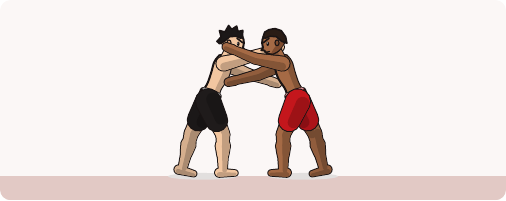
In wrestling slang, a "shoot" is a real contest rather than a planned one. Shoot wrestling grew in Japan from catch wrestling, much of it passed on by Karl Gotch to professional wrestlers who wanted real fighting skill. It mixes strikes, throws and submissions, and it helped shape modern MMA. Satoru Sayama founded Shooto, one of its best-known forms, in 1985.
Who it suits. People who want a complete fighting art with grappling at its heart.
Beginner's-eye tip. Work slowly through the moment a fight goes from standing to the ground. That transition is where beginners get caught out, and where injuries happen.
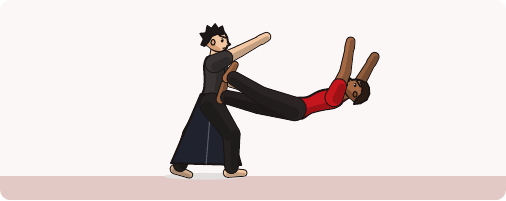
Aikido
Founded by Morihei Ueshiba in Japan in the 1920s and 1930s, aikido blends with an attack and redirects its force using circular movement, joint locks and throws. Most styles have no competition. Senior students often wear a hakama, a wide, pleated trouser.
Who it suits. All ages, including older beginners, and people more interested in harmony and movement than competition.
Beginner's-eye tip. Don't fight your partner's movement; follow it. That is aikido's great lesson, and it works off the mat as well.
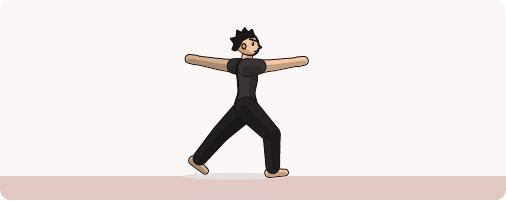
Tai Chi
A Chinese internal martial art practised as slow, flowing forms, with well-known styles including Chen and Yang. It has genuine martial roots, which you can explore through partner practice called push hands. Tai chi is widely recommended for balance and wellbeing, especially for older adults.
Who it suits. Older beginners, people recovering from injury, and anyone looking for calm.
Beginner's-eye tip. Slow is not the same as easy. Moving slowly with control builds the leg strength and balance that every other art relies on.
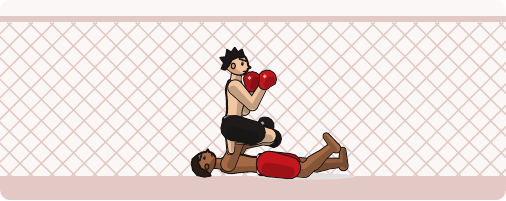
Mixed Martial Arts (MMA)
MMA combines striking and grappling, drawing on boxing, Muay Thai, wrestling, BJJ and more. It became widely known after the first UFC event in 1993.
Who it suits. People who want a complete, modern skill set and love variety.
Beginner's-eye tip. Learn one range at a time: a month on footwork, a month on takedowns. Trying to learn everything at once is how beginners get overwhelmed.
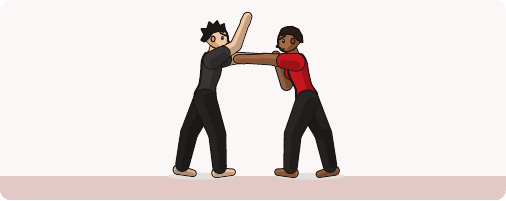
Krav Maga
Developed by Imi Lichtenfeld and later adopted by the Israeli military, Krav Maga teaches simple, direct responses to common attacks, alongside awareness, avoidance and escape.
Who it suits. People whose main goal is practical self-defence.
Beginner's-eye tip. The best self-defence is not being there. Awareness and leaving early are skills too, and you can practise them every day.
Ready to choose?
The book gives every style a full page, plus how to find a good club, what happens in your first class, kit, safety and a 12-week plan.
